


Understanding the Four Quadrants
President Eisenhower faced constant decisions about where to direct his attention. Important tasks build toward your goals, while urgent tasks demand immediate response. The challenge? They’re not always the same thing. You’ll spend your day juggling both, and without a framework, you’ll likely chase urgency and neglect importance.
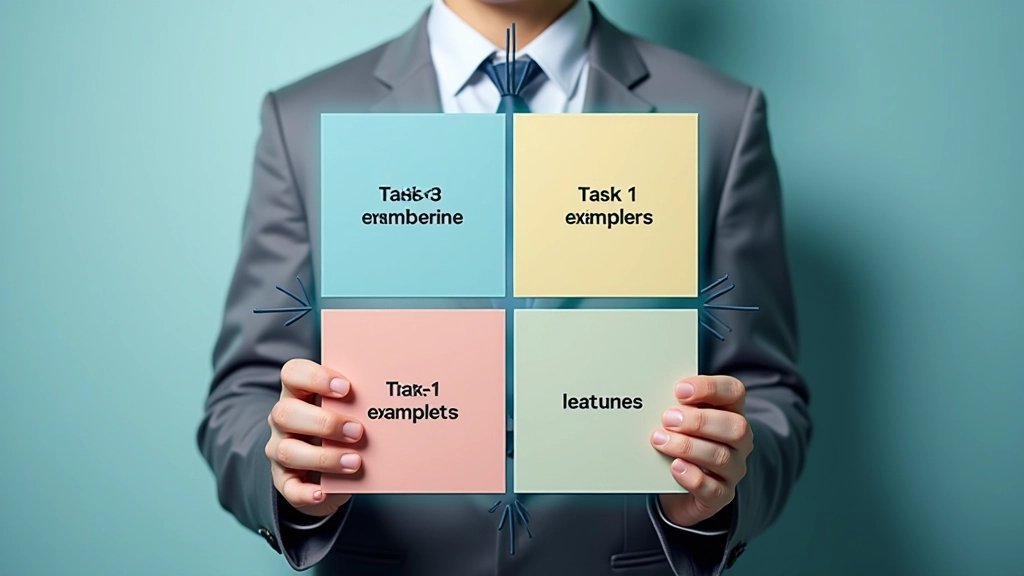
The matrix divides your work into four zones. Quadrant 1 holds tasks that are both urgent and important—your crisis response team, the presentation due today, the client escalation. These need immediate action. Quadrant 2 contains important but non-urgent work—the strategic project that’ll transform your team, the skill development you’ve been planning, relationship building with key stakeholders. This is where real progress happens, but it’s easy to postpone.
Quadrant 3 traps many professionals. These tasks feel urgent—a message pinging your phone, a meeting request, someone else’s deadline—but they don’t actually move you forward. You’re reacting to others’ priorities. Quadrant 4 is pure distraction: scrolling, busy work, activities that fill time without purpose.
Why Hong Kong Professionals Get This Wrong
In Hong Kong’s fast-paced corporate environment, everything feels urgent. You’ve got back-to-back meetings, Slack messages arriving every few minutes, and a culture where responsiveness signals commitment. That’s the trap. Your inbox isn’t your strategy. Responding quickly to everything means you’re optimizing for other people’s agendas, not your own progress.
The real cost isn’t the time spent in Quadrant 1—you can’t avoid genuine emergencies. It’s the systematic neglect of Quadrant 2. Strategic projects stall. Your learning stagnates. Relationships with direct reports become transactional. A year passes and you realize you’ve been running faster but not getting ahead. This matrix forces you to name what’s actually important and protect time for it.
The Hard Truth: If you don’t schedule Quadrant 2 work, it won’t happen. You’ll fill every gap with Quadrant 3 tasks because they create immediate pressure. Block time for important work like you’d block time for a client meeting.
Important Note
This article provides educational information about time management frameworks. Individual circumstances vary significantly—what counts as “important” depends entirely on your personal goals and role requirements. The Eisenhower Matrix is a decision-making tool, not a prescription. You’ll need to evaluate your own priorities based on your organization’s needs and career objectives.
Practical Implementation: The Weekly Review
Here’s what works: Every Friday afternoon, spend 30 minutes reviewing your task list. Go through each item and ask two questions. Is this actually important to my core responsibilities or career growth? And does it require immediate action? Plot them on the matrix. You’ll be surprised how many things you thought were urgent actually aren’t.
Start with just your top 15-20 items. Don’t try to categorize everything—that’s analysis paralysis. Once you see the pattern, it becomes intuitive. Tasks in Quadrant 1 get done this week. Quadrant 2 items get scheduled for next week—actually put them on your calendar. Quadrant 3 items either get delegated, rescheduled, or deleted. Most of them can wait or don’t need you at all.
List Everything
Brain dump all tasks and commitments. Don’t organize yet, just capture.
Categorize Ruthlessly
Place each task in one quadrant. If you’re unsure, ask: “Does this move me toward my goals?”
Schedule Quadrant 2
Block specific time for important work. Treat it like a client meeting—it’s non-negotiable.
Delegate or Delete
Everything else either gets delegated to someone with spare capacity or removed entirely.
Making It Stick: Real Obstacles
The matrix is simple in theory. In practice, you’ll hit resistance. Your boss might interpret your blocked calendar time as unavailability. Your team might expect immediate responses to everything. These are real constraints, not excuses. You’ll need to manage them explicitly.
Start small. Protect just two hours per week for Quadrant 2 work. Early morning works well—before the daily noise starts. Set an auto-responder that says you’ll respond to messages within 24 hours. Most things aren’t actually emergencies. Once your team adjusts to this pattern, they’ll stop treating everything as urgent. You’re training them about what truly needs immediate attention.

You’ll also notice that some Quadrant 1 tasks could’ve been Quadrant 2 tasks if you’d started earlier. That’s valuable information. Next quarter, when that annual review comes around, start preparing three months ahead instead of scrambling at the deadline. The matrix isn’t just about managing today—it’s about preventing tomorrow’s crises through better planning.
The Real Payoff
After using this framework for a few months, something shifts. You stop feeling like you’re constantly putting out fires. Your strategic projects actually advance. You finish work with time to spare instead of at 8 PM. The stress doesn’t disappear—crisis happens—but it’s the exception, not the baseline.
You’ll also notice that saying “no” becomes easier. When a request comes in, you can quickly assess which quadrant it belongs to. If it’s not important and not urgent, you’ve got permission to decline or delegate. That clarity is powerful. You’re not being selfish or lazy. You’re being intentional about how your time serves your actual priorities, not everyone else’s. That’s the whole point.